

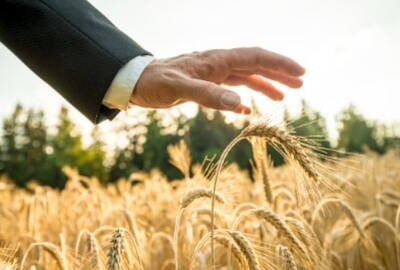


Agricultural Sustainability
Definition of Agricultural Sustainability
Agricultural sustainability is the practice of producing food, fibre, and other agricultural products in ways that maintain soil health, protect water resources, support biodiversity, and remain economically viable for farmers over the long term. It focuses on farming systems that can continue to operate productively without degrading the land, ecosystems, or rural communities that depend on them.
Unlike general sustainability, agricultural sustainability is rooted in on-farm decision-making — how crops are grown, animals are raised, inputs are used, and land is managed across seasons and generations.
Why sustainable Agriculture Matters
Agricultural sustainability matters because farming depends directly on natural systems. Depleted soils, polluted water, loss of pollinators, and climate stress reduce the ability of agriculture to produce food reliably.
Sustainable agricultural systems help ensure:
Long-term food security
Stable farm incomes and rural livelihoods
Reduced environmental damage from fertilisers, pesticides, and over-extraction of resources
Greater resilience to climate variability and extreme weather
As global food demand increases, agricultural sustainability provides a framework for producing more food without exhausting the land or harming ecosystems.
Key Principles of Agricultural Sustainability
• Soil Health – Maintaining soil structure, organic matter, and biological activity
• Water Stewardship – Efficient irrigation and protection of water quality
• Biodiversity – Supporting pollinators, beneficial insects, and diverse landscapes
• Climate Resilience – Adapting farming systems to changing weather patterns
• Economic Viability – Ensuring farms remain profitable across generations
• Animal Welfare – Responsible livestock management and health
Sustainability vs Regenerative vs Net Zero
Although often used interchangeably, sustainability, regenerative agriculture, and net zero represent different but overlapping concepts in environmental and agricultural strategy.
Comparison Table
Feature | Sustainability | Regenerative Agriculture | Net Zero |
|---|---|---|---|
Core Focus | Balancing environmental, social and economic needs | Restoring and improving ecosystems | Achieving a balance between emissions produced and removed |
Primary Goal | Maintain long-term system viability | Actively improve soil and ecosystem health | Reduce greenhouse gas emissions to net zero |
Scope | Broad — applies to all sectors | Primarily agriculture and land management | Climate-specific target across industries |
Approach | Reduce harm and improve efficiency | Regenerate soil, biodiversity and natural systems | Cut emissions and increase carbon sequestration |
Timeframe | Long-term balance | Long-term ecosystem restoration | Targeted emissions timeline (e.g., 2050 goals) |
Soil Role | Important for productivity and resilience | Central focus (soil health and carbon storage) | Soil can act as a carbon sink |
Carbon Emphasis | May include emissions reduction | Strong emphasis on soil carbon | Core objective is carbon neutrality |
Certification/Standards | Various frameworks (e.g., ESG, SDGs) | No single global standard | National and corporate climate targets |
Measurement | Environmental, social and economic metrics | Soil health, biodiversity, carbon levels | Carbon accounting and emissions reporting |
End Objective | Long-term balanced systems | Ecological restoration and resilience | Climate neutrality |
Key Distinctions
Sustainability maintains balance.
Regenerative agriculture improves and restores ecosystems.
Net zero focuses specifically on carbon emissions reduction.
How They Work Together
In agriculture:
Sustainability provides the overall framework
Regenerative agriculture delivers land-based improvement strategies
Net zero sets climate accountability targets
A farm can be:
Sustainable without being regenerative
Regenerative without formally tracking net zero
Net zero without fully regenerating ecosystems
The strongest long-term strategies integrate all three approaches.
Frequently Asked Questions on Agricultural Sustainability
What is sustainability?
Sustainability refers to meeting current needs without compromising the ability of future generations to meet theirs.
What are the three pillars of sustainability?
The three pillars are environmental protection, social responsibility and economic viability.
Why is sustainability important in agriculture?
Sustainability helps ensure long-term food production, soil health, biodiversity protection and climate resilience.
How does sustainability relate to climate change?
Sustainable practices can reduce greenhouse gas emissions, improve carbon sequestration and support adaptation to climate impacts.
What is sustainable farming?
Sustainable farming aims to balance productivity, environmental protection and economic stability.
How can farmers improve sustainability?
Farmers can adopt efficient water use, soil conservation practices, crop diversification and renewable energy solutions.
Is sustainability the same as regenerative agriculture?
Not exactly — sustainability focuses on maintaining balance, while regenerative agriculture aims to actively restore ecosystems.
What is corporate sustainability in agribusiness?
Corporate sustainability involves responsible sourcing, emissions reduction, ethical supply chains and environmental stewardship.
How is sustainability measured?
It can be assessed using indicators such as carbon footprint, water use efficiency, biodiversity impact and soil health metrics.
What is the role of consumers in sustainability?
Consumer demand influences supply chains, encouraging responsible production and transparent sourcing practices.
Related Terms
Useful Resources on Agricultural Sustainability
Explore these authoritative resources to learn more about agricultural sustainability, sustainable farming practices, soil health, climate resilience, and food system resilience.
•FAO – Sustainable Agriculture and Food Systems - Global guidance on sustainable farming systems, climate-smart agriculture, soil conservation, and food security policies.
• FAOSTAT – Agriculture, Environment and Sustainability Data - Comprehensive global datasets on crop production, livestock systems, fertiliser use, land use, emissions, and environmental impacts of agriculture.
• DEFRA – Sustainable Farming Incentive (UK) - Official UK government guidance on sustainable land management, soil standards, biodiversity actions, and environmentally responsible farming payments.
• OECD – Agriculture and Environmental Sustainability - In-depth analysis of sustainable agriculture policies, agri-environment indicators, and the economic impacts of environmental farming practices.
• USDA Sustainable Agriculture Research and Education (SARE)- Research-backed resources on sustainable crop production, soil health management, integrated pest management, and resilient farming systems.
• Our World in Data – Agriculture, Land Use and Sustainability - Clear visual data and analysis covering agricultural land use, yields, environmental trade-offs, emissions, and global food systems.
• Ellen MacArthur Foundation – Regenerative and Circular Agriculture- Insights into regenerative farming models, circular food systems, and reducing agricultural waste and resource inputs.
• AGRIS – International Agricultural Research Database- A global index of peer-reviewed research, technical reports, and scientific studies on sustainable agriculture and rural development.
• Soil Association – Sustainable and Organic Farming (UK)- Practical guidance on soil health, organic farming standards, biodiversity-friendly agriculture, and sustainable food systems.
• IPCC – Climate Change and Agriculture Reports- Authoritative scientific assessments on climate risks, adaptation strategies, and mitigation options for agriculture and food systems.
Learn the meaning of more essential agricultural terms with our easy-to-use Key Terms Glossary here
Our Industry Insights



Looking for
JOBS?