

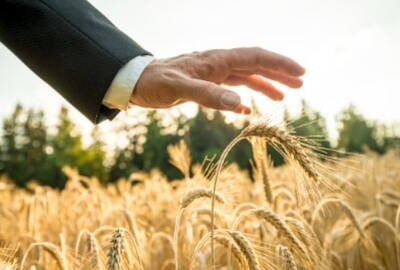


Dryland Farming
Definition of Dryland Farming
Dryland farming is an agricultural system that produces crops without relying on irrigation, instead making strategic use of natural rainfall and soil moisture conservation techniques. It is practiced in regions with low or variable rainfall, where careful management of soil, crop choice, and planting timing is essential to sustain production.
Rather than maximising yield through added water, dryland farming focuses on minimising moisture loss and optimising water use efficiency within natural climate limits.
Why Dryland Farming Matters
Dryland farming matters because it supports food production in water-scarce and semi-arid regions, where irrigation is limited or unavailable. Its importance includes:
Reducing dependence on irrigation and freshwater extraction
Supporting agriculture in drought-prone environments
Enhancing climate resilience under increasing rainfall variability
Lowering energy and infrastructure requirements
Maintaining agricultural livelihoods in marginal landscapes
As water scarcity becomes more widespread, dryland farming plays a critical role in sustainable land and water management.
Key Practices in Dryland Farming
Soil Moisture Conservation – Mulching, reduced tillage, and residue retention
Crop Selection – Drought-tolerant and early-maturing crop varieties
Crop Rotation and Fallowing – Allowing soils to store moisture between crops
Timely Planting – Aligning sowing with rainfall patterns
Weed Management – Reducing competition for limited water
Soil Structure Management – Improving infiltration and water-holding capacity
Frequently Asked Questions on Dryland Farming
What is dryland farming?
Dryland farming is an agricultural method used in areas with low rainfall, relying on soil moisture conservation rather than irrigation to grow crops.
Where is dryland farming commonly practiced?
Dryland farming is common in semi-arid and drought-prone regions, including parts of the UK, Europe, North America, Australia and Africa.
What crops are suitable for dryland farming?
Crops such as wheat, barley, sorghum, millet, pulses and certain oilseeds are commonly grown in dryland systems due to their drought tolerance.
How does dryland farming conserve water?
Dryland farming conserves water through minimum tillage, residue retention, crop rotation, moisture-efficient planting and soil organic matter management.
What are the challenges of dryland farming?
Key challenges include variable rainfall, drought stress, soil erosion, yield variability and climate uncertainty.
Can dryland farming be sustainable?
Yes — when managed carefully, dryland farming can improve soil structure, water retention, carbon storage and long-term land resilience.
How does dryland farming differ from irrigated farming?
Dryland farming depends solely on natural rainfall, while irrigated farming supplements crops with additional water sources.
Does dryland farming reduce environmental impact?
Dryland systems can reduce pressure on water resources and groundwater abstraction, contributing to more efficient water use and resource conservation.
How can farmers improve yields in dryland farming?
Yields can be improved through drought-resistant crop varieties, improved soil management, precision planting and moisture conservation techniques.
Is dryland farming linked to climate-smart agriculture?
Yes — dryland farming practices often align with climate adaptation strategies, focusing on resilience, water efficiency and risk management.
Related Terms
Useful Resources on Dryland Farming
Explore these authoritative resources to learn more about dryland agriculture, drought management, and water-efficient farming systems:
FAO – Dryland Agriculture and Water Scarcity – Global guidance on farming in arid and semi-arid regions.
ICARDA – Dryland Farming Research– Research on crops and systems for dry environments.
Our World in Data – Water Use in Agriculture – Agricultural Water as a share of total water withdrawals.
USDA – Dryland Crop Production – Practical resources for rain-dependent farming systems.
DEFRA – Drought and Water Management (UK) – Policy and resilience guidance.
AGRIS – Dryland Farming Research Database– Peer-reviewed studies on dryland systems.
World Bank – Agriculture and Water Scarcity– Economic and policy perspectives.
OECD – Climate-Resilient Farming Systems– Analysis of adaptation strategies.
ScienceDirect - An overview of Dryland Farming.
The Dry Farming Institute - A non-profit organization. Their mission is to empower growers to thrive with less water.
Learn the meaning of more essential agricultural terms with our easy-to-use Key Terms Glossary here
Our Industry Insights



Looking for
JOBS?