

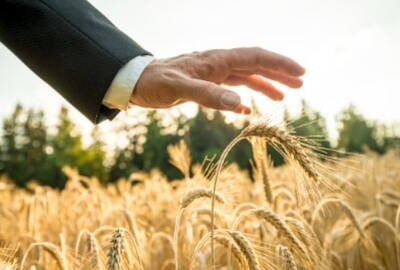


Rainfed Agriculture
Definition of Rainfed Agriculture
Rainfed agriculture is a farming system in which crop growth depends primarily on natural rainfall rather than on artificial irrigation systems. Water availability is governed by precipitation patterns, soil moisture retention, and local climate conditions, making rainfall timing and distribution central to crop success.
This form of agriculture is commonly practiced in regions where irrigation infrastructure is limited or impractical, and it relies heavily on soil management, crop selection, and seasonal planning to optimise water use.
Why Rainfed Agriculture Matters
Rainfed agriculture matters because it accounts for a large share of global food production, particularly in developing regions and dryland environments. Its importance includes:
Supporting staple crop production such as cereals, pulses, and oilseeds
Reducing dependence on freshwater withdrawals compared to irrigated systems
Lower energy and infrastructure requirements
High vulnerability to climate variability and drought
Strong links to food security and rural livelihoods
Improving the resilience of rainfed agriculture is critical for climate adaptation, sustainable land management, and global food stability.
Key Characteristics of Rainfed Agriculture
Dependence on Rainfall – Crop water supply comes from natural precipitation
Seasonal Cropping Patterns – Planting aligned with rainfall cycles
Soil Moisture Management – Practices such as mulching and conservation tillage are essential
Climate Sensitivity – Yields strongly influenced by rainfall variability
Low External Inputs – Reduced reliance on irrigation infrastructure
Crop and Variety Selection – Use of drought-tolerant or early-maturing crops
Risk Management Strategies – Diversification and adaptive practices reduce failure risk
Benefits and Disadvantages of Rainfed Agriculture
Rainfed agriculture plays a vital role in global food production, particularly in regions where irrigation infrastructure is limited. While it offers environmental and economic advantages, it also presents challenges linked to climate variability.
Benefits of Rainfed Agriculture
Reduced Water Extraction
Rainfed systems rely on natural rainfall rather than groundwater or surface water abstraction, helping to:
Protect freshwater resources
Reduce pressure on aquifers
Lower irrigation-related energy use
Lower Infrastructure Costs
Without the need for irrigation systems, pumps or extensive water storage, rainfed farming can involve:
Lower capital investment
Reduced energy consumption
Simplified operational management
Improved Environmental Sustainability
Rainfed systems can contribute to:
Reduced water-related emissions
Lower risk of salinisation from over-irrigation
Greater alignment with natural climatic cycles
Encourages Soil Conservation Practices
Because water availability is critical, rainfed farming often promotes:
Mulching
Conservation tillage
Organic matter enhancement
Water retention strategies
These practices can strengthen soil resilience and structure.
Disadvantages of Rainfed Agriculture
Dependence on Rainfall Patterns
Rainfed systems are highly vulnerable to:
Drought
Irregular rainfall
Delayed or shortened rainy seasons
This can lead to unpredictable yields.
Climate Change Sensitivity
Changing climate conditions may increase:
Extreme weather events
Prolonged dry periods
Rainfall variability
This can heighten production risk in rainfed regions.
Yield Variability
Compared to irrigated systems, rainfed agriculture may experience:
Lower average yields in dry years
Greater seasonal fluctuations
Reduced production stability
Limited Crop Choice in Dry Regions
In low-rainfall areas, farmers may be restricted to:
Drought-tolerant crops
Short-season varieties
Lower water-demand species
Balancing Productivity and Resilience
Rainfed agriculture can remain productive when supported by:
Climate-adapted crop varieties
Soil moisture conservation
Crop diversification
Water harvesting techniques
When integrated with sustainable land management practices, rainfed systems can support both environmental stewardship and long-term agricultural resilience.
Frequently Asked Questions on Rainfed Agriculture
What is rainfed agriculture?
Rainfed agriculture is a farming system that relies entirely on natural rainfall for crop growth rather than irrigation systems.
How is rainfed agriculture different from irrigated farming?
Rainfed farming depends on seasonal rainfall, while irrigated agriculture uses artificial water supply systems to support crops.
What crops are commonly grown in rainfed systems?
Crops such as wheat, barley, maize, sorghum and pulses are often cultivated in rainfed conditions, depending on climate.
What are the benefits of rainfed agriculture?
Rainfed systems can reduce water extraction, energy use and infrastructure costs, supporting lower-input farming.
What are the risks of rainfed farming?
Rainfed agriculture is vulnerable to drought, unpredictable rainfall patterns and climate variability.
How does rainfed agriculture impact soil health?
Soil management practices such as mulching and conservation tillage are essential to maintain moisture retention and prevent erosion.
Can rainfed agriculture be sustainable?
Yes — when supported by soil conservation, crop diversification and climate-adaptive practices.
How does climate change affect rainfed agriculture?
Changing rainfall patterns and extreme weather events can increase yield variability and water stress.
What is dryland farming?
Dryland farming is a form of rainfed agriculture adapted to low-rainfall regions.
How can farmers improve resilience in rainfed systems?
Resilience can be improved through crop selection, water harvesting, soil organic matter enhancement and diversified planting systems.
Related Terms
Useful Resources on Rainfed Agriculture
Explore these authoritative resources to learn more about rainfed farming systems, water management, and climate resilience:
FAO – Rainfed Agriculture and Water Management – Global guidance on improving productivity and resilience in rainfed systems.
World Bank – Rainfed Agriculture and Food Security – Research on rainfed systems, poverty reduction, and climate adaptation.
Our World in Data – Water Use in Agriculture – Data on global water sources and agricultural dependence on rainfall.
AGRIS – Rainfed Farming Research Database – Peer-reviewed research on rainfed cropping systems and water efficiency.
ICRISAT – Dryland and Rainfed Agriculture Research – Applied research focused on semi-arid and rainfed regions.
OECD – Water Risk and Agriculture – Policy analysis on water scarcity and agricultural adaptation.
IPCC – Climate Change and Agriculture Reports – Scientific assessments of climate impacts on rainfed systems.
DEFRA – Water Management in Agriculture (UK)– Policy guidance relevant to rainfed and low-input systems.
CABI – Dryland and Rainfed Farming Resources – Technical knowledge on rainfed crop production.
Ellen MacArthur Foundation – Resilient Food Systems – Insights on resilience strategies relevant to rainfed agriculture.
ScienceDirect - Scientific and technical peer-reviewed journal articles and book chapters on Rainfed Agriculture.
Learn the meaning of more essential agricultural terms with our easy-to-use Key Terms Glossary here
Our Industry Insights



Looking for
JOBS?